
You can break from too little, too
Burnout gets the headlines and the rest cures. Its quiet twin, boreout, comes from under-challenge instead of overload, and it does damage that a longer vacation was never going to reach.
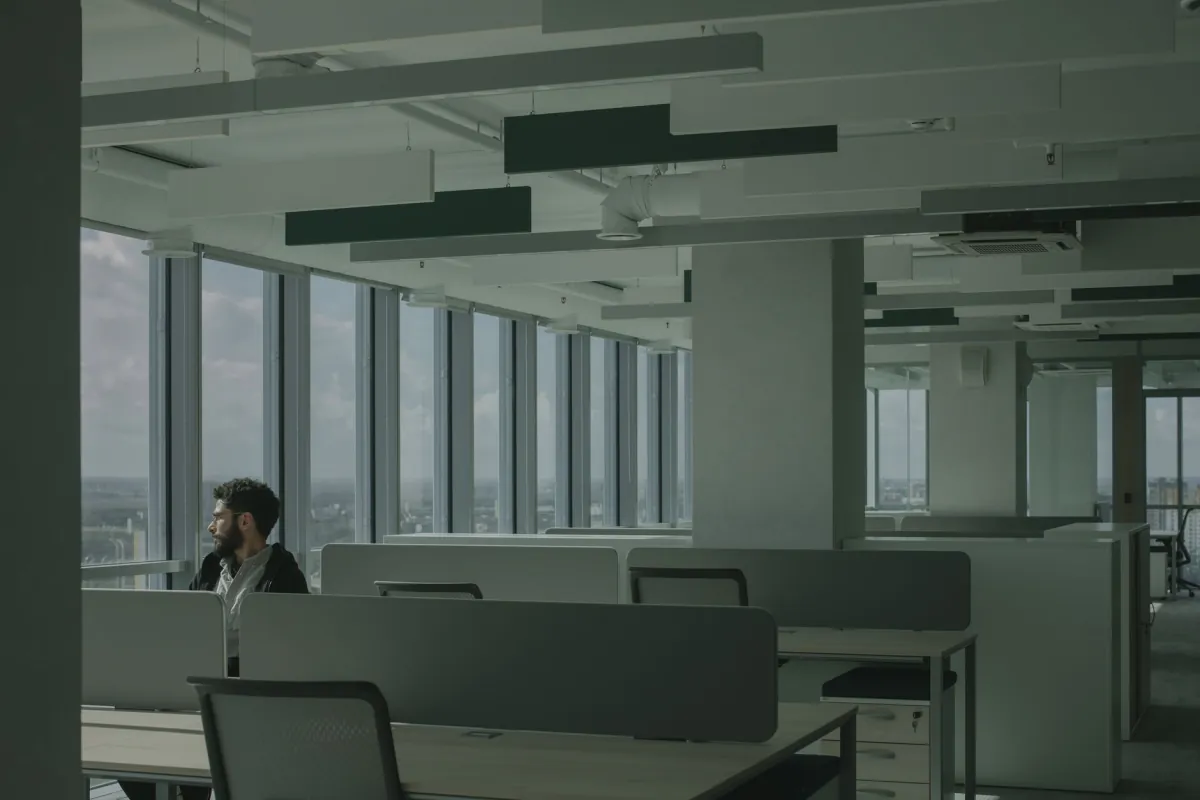
There are two ways a job can wear a person down, and we have built a whole vocabulary for only one of them. The one we talk about is overload: too much work, too fast, for too long, until something gives. We call it burnout, and we prescribe rest. The other way is quieter and almost unspeakable, because it sounds like ingratitude. It is what happens when a job asks too little. When the hours are survivable and the pay is fine and the calendar is full of things that require almost nothing of you, and you go home each night vaguely ashamed of how tired you are by work that was not hard. That is not laziness and it is not burnout. It has a name, boreout, and it is real enough to measure.
The word was coined in 2007 by two Swiss consultants who noticed that some of the most miserable people they met were not the overworked ones. They were the under-used ones, sitting in roles that had quietly emptied out, stretching an hour of real work across a full day and hiding the gap. Boreout has three parts: chronic boredom, a sense of being under-challenged, and a slow loss of interest in the work itself. None of them announce a crisis. That is exactly why it goes unscreened. Burnout arrives loudly. Boreout just accumulates.
It is not the same thing running in reverse
The obvious objection is that boredom is just mild burnout, or plain complaining. The research says otherwise. When Dutch work psychologists built and validated a proper instrument to measure it, the Dutch Boredom Scale, they found that boredom at work is empirically distinct from both burnout and engagement. It is its own state, marked by low arousal and high dissatisfaction, and it grows out of a specific condition: a passive job that does not demand enough of the person doing it. Burnout is the body of someone straining against too much. Boreout is the body of someone idling against too little. They feel different because they are different, and the same rest cure that helps one can make the other worse. Tell a bored, under-used person to take more time off and you have prescribed more of the exact thing that is hollowing them out.
People know this in their feet, even when they cannot name it. When Korn Ferry asked roughly 5,000 professionals why they were job-hunting, the single most common answer was not money and not a bad boss. A third of them said they were bored and needed a new challenge. Only 19 percent named higher pay. People will walk away from a perfectly adequate salary to escape a job that asks nothing of them, and then they will struggle to explain the decision to anyone who asks, because our story about work has no slot for leaving a job that was not hard enough.
The body keeps a longer record than the resume
It would be easy to file all this under mild unhappiness, the kind you are supposed to tough out. The health data does not cooperate. In the Whitehall II study, which has tracked thousands of British civil servants for decades, two epidemiologists went back and asked a blunt question: what happened to the people who had reported being very bored at work? The paper they published carried the plain title "Bored to death?". Their answer was that the most bored civil servants were about two and a half times more likely to die of a cardiovascular problem than those who were not bored. The authors were careful, as good scientists are: boredom itself is probably not the murder weapon, they wrote, but a proxy for other things going wrong in a life that has stalled. Either way, the number is not the number of a trivial mood.
Burnout is the body straining against too much. Boreout is the body idling against too little. The same rest cure that helps one can quietly deepen the other.
The scale of the idling is the part that should stop us. Gallup's 2024 global report, built on more than 128,000 employees across 160 countries, found only 23 percent of people engaged in their jobs. The headline everyone quotes is that small engaged slice. The number that matters for boreout is the one in the middle: 62 percent not engaged. That is not the actively miserable and not the actively thriving. It is the vast coasting center, people who show up, do what the job literally requires, and have quietly stopped expecting the work to ask more of them. Some of that is people staying put in roles that have gone flat. A great deal of it is under-use hiding in plain sight.
Why the rest cure keeps missing
Here is the trap boreout sets. Because it produces the same surface symptoms as burnout, tiredness, dread, a Sunday-night heaviness, the sufferer reaches for the same remedies, and none of them land. You take the vacation and come back to the same empty calendar. You sleep more and wake up equally unstretched. You try to care harder about work that offers nothing to care about, and fail, and read the failure as proof that something is wrong with you. The self-blame is the cruelest part, because it points at your character when the problem is sitting in the shape of the role. Burnout has the same misdiagnosis running the other direction: we treat a mismatch as a personal weakness. Boreout is that mistake wearing the opposite mask.
It helps to notice that the world has an official definition of burnout and none for boreout. When the World Health Organization defined burn-out in 2019, it named the cause as chronic workplace stress that has not been managed. There is no matching entry for the chronic workplace understimulation that has not been managed, even though the second one quietly ends careers too. We have language for being crushed and almost none for being wasted. That absence is why so many capable people sit for years in roles that use a fraction of what they can do, certain the restlessness is a flaw to suppress rather than a signal to read.
So read it. The restlessness of a bored, under-used person is not weakness and it is not greed. It is the most accurate instrument you have, telling you the job is drawing down far less than the account holds. The fix is not the one the burnout playbook keeps handing you. It is not more rest, more balance, more protecting what little energy the job leaves. It is more demand: harder problems, a bigger mandate, work that requires the parts of you that have gone quiet. That can mean pushing the current role to ask more, and it can mean admitting the role will never ask enough and going where the ceiling is higher. Both are real answers. What is not an answer is another week off.
We keep telling exhausted people the problem is that work took too much out of them. For a whole other set of exhausted people, the truth runs the opposite way, and it is stranger and harder to say out loud. The problem was never that you had too little left in you. It was that the job kept asking for too little of it.